.png)
âBecause otherwise, it will be too late here, Mr. Secretary," he said. "Putin will not stop in Ukraine; he will not stop.â
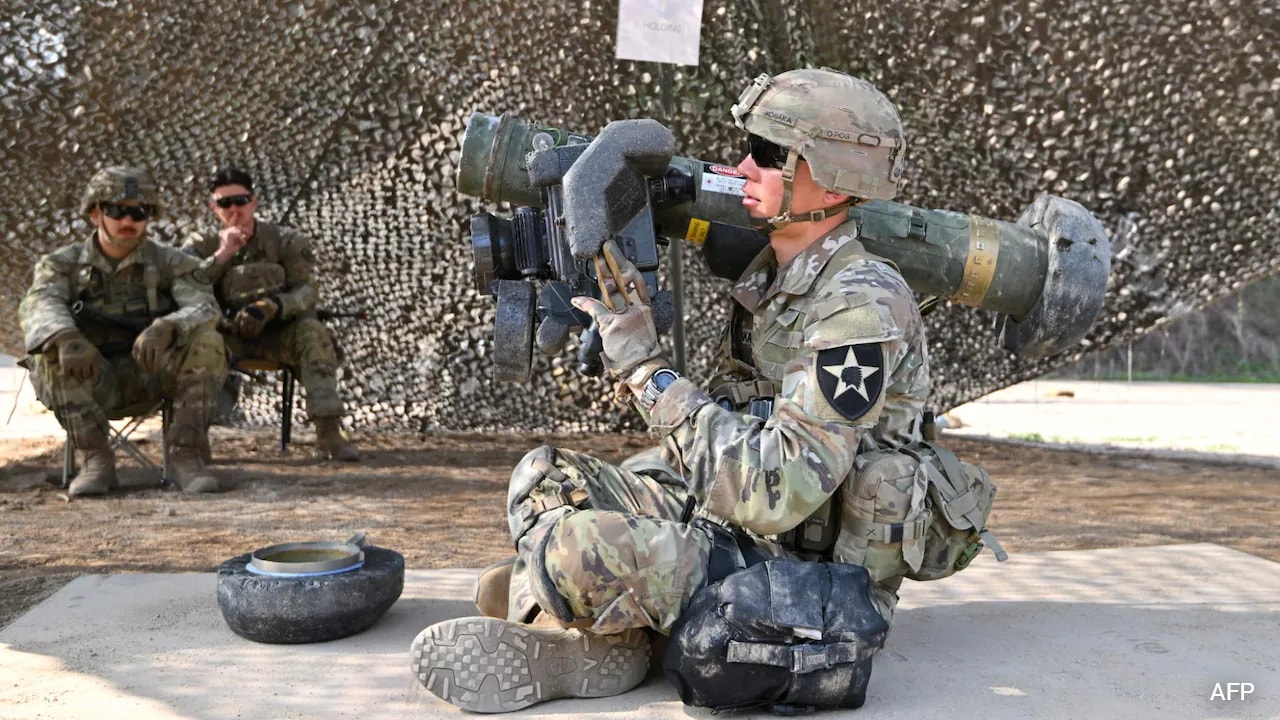
Blinken was in the Baltic states Monday as part of a European tour to shore up support among Western allies as Russiaâs war in Ukraine intensifies. He reassured Latvia and Lithuania, both of which are NATO members, of continued support and said that some 400 additional U.S. troops would soon be arriving in Lithuania.
The Baltic states, which include Estonia, have âformed a democratic wall that now stands against the tide of autocracyâ that Russia is helping create in Europe, Blinken said from the Latvian capital, Riga.
âLatvians who lived through decades of Soviet occupation understand deeply how wrong this is, and how the world must defend Ukraineâs right to exist as a sovereign, democratic country, free to choose its own future," he said. "Latvia has done just that.â
But Baltic leaders say that theyâve long expressed fears Russia would target them for invasion, accusing Moscow of frequently violating NATO airspace and pointing to Russian war games featuring mock incursions into all three states.
The Soviet Union first invaded and occupied the Baltic states, which share borders with Russia, in 1940. It was pushed out by Nazi Germany for several years but returned to occupy all three countries from 1944 to 1991, after which they eventually joined NATO and the European Union.
âOur understanding is more realistic,â Estoniaâs Foreign Minister Eva Maria Liimets said in early February, referring to her nationâs proximity to Russia and the memory of occupation. âWe really sense the threat here because of our history and our experience.â
One major fear is that Russia might attempt to close what is known as the Suwalki Gap, a 60-mile stretch of Polish territory that separates Kaliningrad â a small, isolated and militarized Russian exclave â from Belarus, an ally of Moscow.
âWe no illusions about Putinâs Russia anymore. I donât really see any reason, any good reason, to assume that Russia might change its policy,â Latvian Foreign Minister Edgars Rinkevics said in a Monday briefing with Blinken.
Rinkevics said that the two diplomats discussed the deployment of more NATO forces and that he âwould like to have permanent solutions.â
In recent weeks, as Russia built up its troop footprint around Ukraine in preparation for its assault, the Western alliance has sent additional troops to countries including Poland, Romania and Estonia.
European officials have described Putinâs attack as a watershed moment for Europe.
âRussiaâs reckless aggression against Ukraine once again proves that it is a long-term threat to the European security, the security of the entire alliance, no matter how and when the war in Ukraine ends,â Nauseda said, according to a State Department transcript. âThis is a very good opportunity to rethink ⦠the alliance response.â



 English (United States) ·
  Turkish (Turkey) ·