.png)
“This will be a war crime,” Zelensky said in an emotional video Sunday.
The city council in one of the hardest-hit cities, Mariupol, said it would again try to evacuate people from the battle zone Sunday — after a temporary truce broke down less than 24 hours earlier, as Ukrainian officials accused Russian troops of shelling what was supposed to be safe escape route there and Volnovakha.
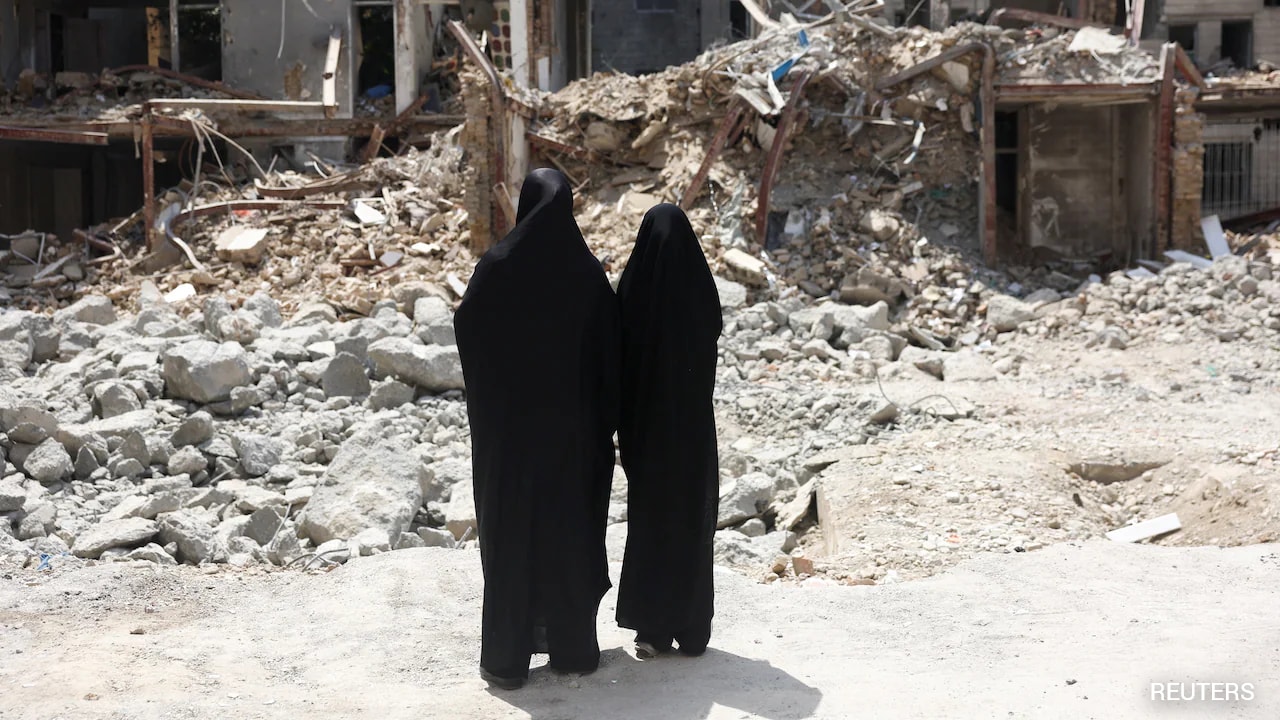
A rocket blast ripped through homes south of Kyiv, Ukraine’s capital. Russia is responding to the surprising “scale and strength” of Ukrainian resistance by targeting residential areas of several cities — Kharkiv, Chernihiv, Mariupol — in an apparent effort to “break Ukrainian morale,” Britain’s Defense Ministry said, noting that Russia deployed “similar tactics” in Chechnya in 1999 and in Syria in 2016. Western officials are cautioning it could be a long-haul, with Britain’s deputy prime minister saying Sunday that thwarting Putin’s invasion could take “months, if not years."
Here’s what to know
U.S. and allies quietly prepare for a Ukrainian government-in-exile and a long insurgency
Return to menuThe Ukrainian military has mounted an unexpectedly fierce defense against invading Russian forces, which have been dogged by logistical problems and flagging morale. But the war is barely two weeks old, and in Washington and European capitals, officials anticipate that the Russian military will reverse its early losses, setting the stage for a long, bloody insurgency.
The ways that Western countries would support a Ukrainian resistance are beginning to take shape. Officials have been reluctant to discuss detailed plans, since they’re premised on a Russian military victory that, however likely, hasn’t happened yet. But as a first step, Ukraine’s allies are planning for how to help establish and support a government-in-exile, which could direct guerrilla operations against Russian occupiers, according to several U.S. and European officials.
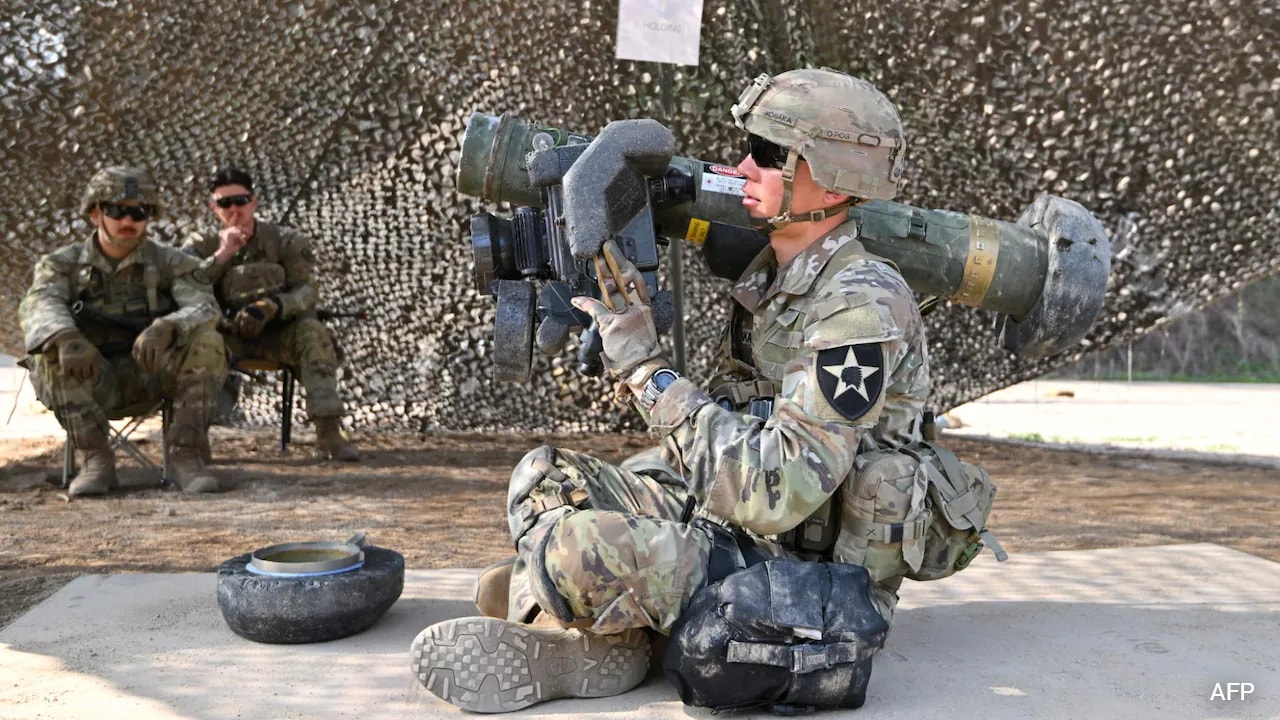
The weapons the United States has provided to Ukraine’s military, and that continue to flow into the country, would be crucial to the success of an insurgent movement, officials said. The Biden administration has asked Congress, infused with a rare bipartisan spirit in defense of Ukraine, to take up a $10 billion humanitarian aid and military package that includes funding to replenish the stocks of weapons that have already been sent.
Russian forces preparing to bomb Odessa, Zelensky says: ‘This will be a war crime’
Return to menuODESSA, Ukraine — Russian forces are preparing to bomb Odessa, which is a critical port and Ukraine’s third-largest city with about 1 million people, Ukrainian President Volodymyr Zelensky said Sunday in an emotional video.
“Russians always traveled to Odessa, always felt only warmth in Odessa,” Zelensky said. “And now what? Bombs against Odessa, artillery against Odessa, rockets against Odessa. … This will be a war crime.”
Odessa is the most economically strategic port of Ukraine’s southern cities, making it a clear target for Russian troops who have already laid siege to shipping hubs across the Black Sea coastline. The city’s beach — normally full of sunbathing tourists — is now littered with mines. Sand has been shoveled into sacks for roadblocks. Russian warships have been visible from the shore for days.
The threat on Odessa builds after a rocket blast tore through homes south of Kyiv, the capital, as Russia targets residential areas across several cities in a push to “break Ukrainian morale,” Britain’s Defense Ministry said.
Areas that were bustling 12 days ago — with people dining, shopping and taking afternoon strolls — now lack electricity, heat and running water. More than 1.5 million people have fled the country, and thousands of others are rushing to evacuate during a cease-fire planned for Sunday. But uncertainty looms over the escape effort: Russian shelling broke another temporary truce less than 24 hours earlier.
Attacks on Ukrainian health-care facilities have killed 6, injured 11, WHO says
Return to menuAt least six people have been killed and nearly a dozen more injured following several attacks on health-care facilities in Ukraine, World Health Organization Director General Tedros Adhanom Ghebreyesus confirmed Sunday.
“Attacks on healthcare facilities or workers breach medical neutrality and are violations of international humanitarian law,” he tweeted, adding that additional incidents are being investigated.
The organization has recorded six deaths and 11 injuries as a result of the attacks since Russian forces began invading Ukraine on Feb. 24. The WHO reported that some health-care facilities were attacked by heavy weapons, which can include tanks, missiles or bombs.
.@WHO has confirmed several attacks on health care in #Ukraine, causing multiple deaths and injuries. Additional reports are being investigated. Attacks on healthcare facilities or workers breach medical neutrality and are violations of international humanitarian law. #NotATarget https://t.co/Wdc2jeoHIB
— Tedros Adhanom Ghebreyesus (@DrTedros) March 6, 2022Many in Ukraine are in dire need of health services, the organization tweeted Saturday, adding, “Even in times of conflict, we must protect the sanctity and safety of health care, a fundamental human right.”
Senate Republicans threaten to slow efforts to deliver aid to Ukraine, fund federal agencies
Return to menuSenate Republicans have issued a series of early threats against a still-forming deal to fund the federal government, signaling that they could delay the package — which may include emergency aid to Ukraine — over concerns about excessive spending and vaccine mandates.
The early warnings, delivered in two letters to Senate Majority Leader Charles E. Schumer (D-N.Y.), could slow lawmakers’ time-sensitive work as Russia’s incursion into Ukraine is intensifying — all while Washington faces a March 11 deadline to fund federal agencies and avoid a government shutdown.
In the first letter, sent Thursday, eight GOP lawmakers complained that “families are feeling the pressure of skyrocketing prices,” which they blamed on “reckless government spending.” In response, they said they “cannot allow another massive spending package to be rushed through Congress without proper consideration and scrutiny.”
Zelensky praises Ukrainian resistance in latest address: ‘This is a special heroism’
Return to menuUkrainian President Volodymyr Zelensky praised the fighting spirit of his people and called on them to “go on the offensive,” as Britain’s Defense Ministry said Saturday that four of the country’s cities — Kharkiv, Chernihiv, Mariupol and Sumy — are “highly likely” to be surrounded by Russian forces.
“This is a special heroism — to protest when your city is occupied,” Zelensky said Saturday evening local time, in a speech posted to his Telegram channel. “Our people, Ukrainians, do not retreat, do not give up, do not stop their resistance.”
The wartime president addressed people living in areas occupied by Russian forces, urging them to “fight for your freedom.” And he praised Ukrainians for responding in whatever way they could, from soldiers on the front lines to doctors saving lives and civilians working to provide essential services amid the violence.
Since the invasion began 11 days ago, reports have highlighted Ukrainians’ efforts to fight back, even when outgunned by Russian forces. Some have removed road signs to throw off incoming Russian forces, while a government unit has documented the invasion, one meme at a time.
“We are all rebuilding the country together,” Zelensky said.
Britain’s Defense Ministry also noted Sunday that the “scale and strength of Ukrainian resistance continues to surprise Russia.”
Mission to stop Putin in Ukraine could take ‘months, if not years,’ U.K. official says
Return to menuThe effort by Western nations to make sure Russia does not succeed in its invasion of Ukraine could take “months, if not years,” a top British official said Sunday.
Dominic Raab, Britain’s deputy prime minister, said the effort to “ensure Putin fails in Ukraine … is going to take some time. We’re talking about months, if not years.”
Speaking on the Sky News show “Trevor Phillips on Sunday,” Raab added, “Therefore, we’ll have to show some strategic stamina, because this is not going to be over in days.”
The comments come as Britain’s Defense Ministry on Sunday said that the “scale and strength of Ukrainian resistance continues to surprise Russia,” which had anticipated a weaker response from Ukraine that would have allowed it to quickly take the capital, Kyiv — and, along with it, control over the government.
Raab noted that although “none of the major cities have yet fallen,” Russia has responded with “evermore brutal tactics.”
Governments around the world have responded to the invasion by hitting Russia with crippling sanctions, as companies — including major payment platforms like Visa, Mastercard and American Express — have joined in the effort.
Deputy Prime Minister Dominic Raab says 'Putin must fail in Ukraine' but that could take 'months if not years' so we need to show 'some strategic stamina'.#Phillips: https://t.co/31OokSLksh
📺 Sky 501, Virgin 602, Freeview 233 and YouTube pic.twitter.com/1gKQ7Inyw9
Ukrainian resistance ‘continues to surprise Russia,’ British intelligence says
Return to menuBritain’s Defense Ministry said in an intelligence update Sunday that the “scale and strength of Ukrainian resistance continues to surprise Russia” as Moscow targets populated areas.
The Ukrainian military has hampered Russia’s advances by advising civilian defense volunteers to attack fuel trucks — which are unarmored and often driven by poorly trained Russian soldiers — instead of armored vehicles. Although Ukraine’s military is severely outmanned and outgunned, Russia has faced stronger resistance than anticipated, exacerbating struggles of its own accord, including supply shortages and low morale. Road signs have been painted over or torn down to confuse Russian troops, many of whom are young and inexperienced in combat.
In response to the Ukrainian tactics, Britain said there was a “realistic possibility that Russia is now attempting to conceal fuel trucks as regular support trucks to minimise losses.”
The intelligence update added that Russia has responded to the resistance “by targeting populated areas,” including Kharkiv, Chernihiv and Mariupol. The move was probably “an effort to break Ukrainian morale,” it said. Russia has used similar tactics of air and ground-based munitions in Chechnya, where heavy bombing took place in 1999 after Russian forces invaded following its declaration of independence, and in Syria in 2016. A month-long bombing campaign in Aleppo, Syria, that year amounted to war crimes and “barbarism,” the United States said at the time.
Radio Free Europe shutters Russia operations, citing crushing regulation
Return to menuRadio Free Europe/Radio Liberty, the network that broadcast uncensored news across the Iron Curtain in Cold War-era Europe, said Saturday it will shutter its operations in Russia, citing mounting fines over its refusal to be identified as a “foreign agent” and a new law stifling freedom of the press.
“This is not a decision that RFE/RL has taken of its own accord, but one that has been forced upon us by the Putin regime’s assault on the truth,” Jamie Fly, the network’s president and chief executive, said in a statement. “Following years of threats, intimidation and harassment of our journalists, the Kremlin, desperate to prevent Russian citizens from knowing the truth about its illegal war in Ukraine, is now branding honest journalists as traitors to the Russian state.”
RFE said that on Friday, the tax authorities in Russia started bankruptcy proceedings against its operations there, stemming from more than $13.4 million in fines for 1,040 violations of Russia’s “unlawful demand” that RFE’s content be labeled as produced by a “foreign agent.”
RFE added that 18 of its journalists also had been designated “foreign agents.” Nine of its Russian-language websites were blocked in the past week, it said, over its refusal to delete information about the invasion of Ukraine.
A law signed by Russian President Vladimir Putin on Friday that threatened 15 years in prison for, as RFE said, “any journalist who deviates from the Kremlin’s talking points on the Ukraine war” played a role in its decision to shut down its Russian operations.
The network, which provides news programming online and through radio and television broadcasts, began as a radio network founded at the beginning of the Cold War “to transmit uncensored news and information to audiences behind the Iron Curtain.”
RFE’s website says it “played a significant role in the collapse of communism and the rise of democracies in post-communist Europe.”





 English (United States) ·
  Turkish (Turkey) ·