.png)
Ukrainian President Volodymyr Zelensky earlier this week described Russiaâs artillery assault on Kharkiv, Ukraineâs second-largest city, as a âwar crime,â and called for an international tribunal to step in.
Western officials, including British Prime Minister Boris Johnson, have leveled similar accusations. President Biden, though, said Wednesday that âitâs too early to sayâ whether Russian President Vladimir Putin is a war criminal. White House press secretary Jen Psaki said Friday that the White House is conducting an âinternal reviewâ to collect evidence on Russiaâs alleged targeting of civilians in Ukraine.
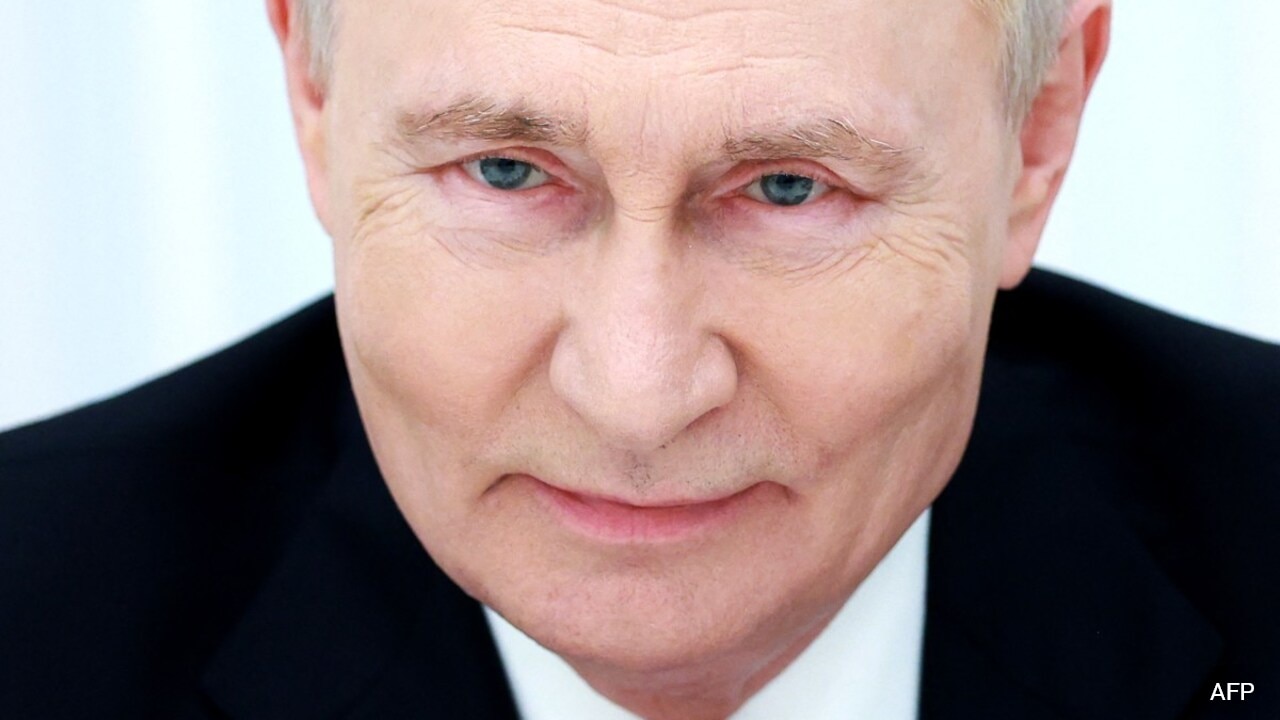
Putin told French President Emmanuel Macron in a phone call on Thursday that Russian forces are doing âeverything possible to preserve the lives of civilians,â according to a Kremlin readout.
War crimes are hard to prove â and may be particularly so in the Ukrainian context, experts say. Accountability is often elusive.
Hereâs what to know about what war crimes are and how perpetrators are prosecuted.
What counts as a war crime?
The modern framework for assessing war crimes was born out of the Nuremberg trials after World War II, in which Nazi Party officials, military officers and German elites were tried on charges including crimes against humanity. The international community sought to set guardrails that would minimize the horror of future conflicts.
People often use âwar crimesâ colloquially to describe a range of actions prohibited under international law during conflict, said William Schabas, a professor of international law at Middlesex University in London. But the term has a precise, technical definition, referring to violations of international law governing conduct in combat and during occupation.
Those violations are spelled out in international treaties such as the Geneva Conventions of 1949 and the Rome Statute, which established the International Criminal Court in 2002 to prosecute individuals responsible for war crimes, along with crimes against humanity and genocide â themselves complex terms with their own set of legal parameters.
War crimes include the deliberate targeting of civilians; attacks that cause disproportionate civilian casualties given the military objective; and attacks on hospitals, schools, historic monuments and other key civilian sites. Plenty of horrific acts of violence resulting in civilian deaths would not meet the definition.
Zelensky also alleged Friday that Russiaâs launch of a projectile that caused a fire at a nuclear power plant in southeastern Ukraine was a âwar crime.âThe Rome statute specifies that intentionally launching an attack that will cause âwidespread, long-term and severe damage to the natural environmentâ could be a crime, depending on the circumstances.
The use of certain weapons, including chemical ones, is also prohibited.
Cluster munitions, which scatter bomblets indiscriminately and leave unexploded duds that pose dangers to civilians after the conflict, are banned by many nations â but not Russia and Ukraine. Russiaâs alleged use of those weapons in Ukraine, as well as âvacuum weapons,â isnât automatically illegal, Schabas said. That determination depends on whether Russia took steps to avoid harming civilians.
Thereâs also a separate legal category of crimes against humanity, which includes mass murder, enslavement and torture.
International law around conflict governs more than just combat. Ukraine has adopted the tactic of posting photos and videos of captured and killed Russian soldiers online, which could be a violation of the Geneva Conventions.
Who has the power to investigate?
Ukrainian authorities have the primary responsibility to investigate alleged violations of international law committed on Ukrainian territory, said James Gow, professor of international peace and security at Kingâs College London. But that would require the Ukrainian justice system being functional.
Another avenue: the International Criminal Court.
Neither Ukraine nor Russia is a party to the court, so neither can bring allegations to prosecutors. But Ukraine has twice accepted the courtâs jurisdiction over its territory â and other countries can refer alleged crimes there to the court. Karim Khan, the ICCâs chief prosecutor, said his office had received referrals from 39 countries as of Wednesday.
Khan announced Wednesday that he was opening an investigation into allegations of war crimes, crimes against humanity or genocide in Ukraine âby any personâ from November 2013 onward.
A preliminary investigation found âreasonable basis to believe crimes within the jurisdiction of the Court had been committedâ and âidentified potential cases that would be admissible,â Khan said in a statement.
Separately, the United Nationsâ top human rights body voted Friday to set up a commission to probe alleged Russian rights violations during the invasion.
What evidence is required to prosecute perpetrators?
A large quantity, and it has to be solid.
ICC investigators have begun collecting evidence, and Khan appealed for countries to give his office additional resources.
Eliot Higgins, the founder of open-source group Bellingcat, told the Guardian that his organization was working with others to preserve evidence of potential war crimes that would be accepted in court.
The world is watching the war unfold in real time, as a flood of videos across Facebook, Telegram, TikTok and Twitter show the destruction left by apparent cluster munitions and strikes on a TV tower close to a Holocaust memorial in Kyiv. Human rights groups and journalists have verified and published eyewitness and social media accounts of attacks on civilian areas.
Amnesty Internationalâs Crisis Evidence Lab analyzed digital evidence â including photos, videos and satellite imagery of indiscriminate attacks in #Ukraine. They have verified violations of international law which could amount to war crimes. pic.twitter.com/4HvPykiYVn
— Amnesty International (@amnesty) March 1, 2022Social media documentation can help in investigations. But the bar for evidence in war crimes cases is high, international law experts say.
War is a bloody business, and civilian casualties are expected. In many cases, proving that the killing of civilians constitutes a war crime requires showing the attackerâs intent to harm civilians or strike forbidden targets such as hospitals and schools. So holding top officials accountable typically requires intercepting communications up the chain of command, Gow said.
And âproportionalityâ is a subjective standard that isnât clearly defined, Schabas said.
âCrimes on the battlefield are very hard to prove,â he said. âThere have been very few successful prosecutions for those types of crimes.â
Building a case is further complicated by increasingly blurred lines between civilians and fighters. Ordinary Ukrainians have taken up arms and gathered to make molotov cocktails. They lose their status as civilians under international law when theyâre fighting, Schabas said.
Could Russian officials be held accountable?
A week into Putinâs invasion, calls for accountability are already ricocheting across the world.
Lithuaniaâs prime minister, Ingrida Simonyte, told The Washington Post on Monday: âWhat Putin is doing, it is just a murder and nothing else. And I hope he will be in [The] Hague,â she said, referring to the seat of the International Criminal Court.
More than three dozen members of the U.S. House of Representatives are backing a resolution calling on the ICC to prosecute Putin âshould anything happenâ to Zelensky, Politico reported.
World leaders have faced trial for war crimes in the past. In a famous example, an international court put the president of the former Yugoslavia, Slobodan Milosevic, on trial in 2002 for war crimes and crimes against humanity in the Balkan wars of the 1990s. Milosevic died in custody before the trial concluded.
But even if the evidence is there, putting Russian officials â let alone Putin â on trial is unlikely, barring major political change in Russia, Gow said. As long as the Russian government remains unwilling to cooperate, and Russians accused of crimes donât travel abroad, thereâs not much international prosecutors can do.
Still, itâs valuable to collect and preserve evidence of potential war crimes and crimes against humanity, Gow said, since circumstances in Russia may change.
âNo one likes to be branded a war criminal, so there is [an] important potential psychological and political effect to be gained contingently from investigations,â he said.
A slew of international sanctions, boycotts and restrictions have swiftly turned Russia into a pariah state. The economic toll has started to show. And a small but loud minority of Russians have voiced opposition to Putinâs invasion.
Even if the perpetrators of any war crimes in Ukraine do not face punishment, stockpiling evidence can serve as a crucial corrective to false narratives.
The international tribunal that tried Milosevic said the âgreatest achievementâ of the proceedings was making reams of evidence available to the public as âa barrier against malign attempts to revise history.â
Amber Phillips contributed to this report.



 English (United States) ·
  Turkish (Turkey) ·